Teething In Babies (Care and Remedies)


Teething is the process by which an infant’s teeth sequentially appear by breaking through the gums. Teething may start as early as three months or as late, in some cases, as twelve months. The typical time frame for new teeth to appear is somewhere between six and nine months.
The level of pain a child can bear differs from one baby to another. The sore and swell that is associated with emerging of teeth is responsible for the pain, restlessness, constant cry, sleeplessness irritability, fever etc babies often experience.

Some of the signs or symptoms that a baby has entered the teething stage will be actions that are noticeable. They may chew on their fingers or toys to help relieve pressure on their gums. Babies might refuse to eat or drink due to the pain. Symptoms will generally fade on their own, but a doctor should be notified if they worsen or are persistent. Teething may cause signs and symptoms in the mouth and gums, but it doesn't cause problems elsewhere in the body.


Pulling on the ears is another sign of pain; the pain in the mouth throbs throughout the baby's head so they pull their ears believing that it will provide relief. Mild rash can develop around the mouth due to skin irritation that is caused because of excessive drooling or dribbling.
Before treating a baby for teething, it is important to know what is causing the baby to be upset. Rubbing a finger gently along the baby’s gums in search for swollen ridges or the feel of a tooth below the gums is one way to be certain. If unsure, it is recommended that the child be seen by a doctor before treatment is administered.

Infants chew on objects to aid in the teething process. This can be dangerous if the baby is allowed to chew on objects which are small enough to be swallowed or which could break while being chewed and cause choking Teething rings (ring for an infant to bite on while teething) and other toys, called teethers, are often designed with textures that will appeal to an infant during teething as they rub it against their gums, they feel relieved of the hunting pain.

In cases where the infant is in obvious pain, some doctors recommend the use of anti-inflammatory or child-safe pain-relief treatments. Some infants gain relief from chewing on cold objects. Dentists recommend brushing infants' teeth as soon as they appear. It is not advisable to wait for the teething process to be complete. Dentists may recommend against the use of fluoride toothpaste during teething.


Birth Injury During Delivery


Birth injuries happen to a baby immediately following or during the time of their delivery. Quite a few different things can cause a birth injury. Some of the causes are natural whereas others are due to medical malpractice or negligence. In any case, it is a devastating situation for both the child as well as his or her parents.One of the most common kinds of birth injury is a brain injury. A brain injury that occurs while the baby is being born is often caused by either bleeding on the brain or it is due to a lack of oxygen.One type of widely known brain injury that happens to newborns is Cerebral Palsy. This condition is the result of damage that occurred to the child's cerebrum, which is a very important part of their brain. If a child is struck with Cerebral Palsy then the baby will not have as much ability as a normal child to control his or her movements. And their mental capacity may be limited as well.


Branchial Plexus is another common type of birth injury. This brain injury is actually caused by Shoulder Dystocia. This happens when the baby's shoulders get stuck in its mother's pelvis. Because the baby's neck is strained in this situation the nerves between the shoulder and the neck can get damaged. Fortunately these are treatable injuries. Although Cerebral Palsy and Brachial Plexus are the two most widely known and most common types of birth injuries, there are other situations that can happen during childbirth that can cause ongoing problems.


For example, if forceps are being used to assist in the delivery, then the baby could experience bruising on his brain or scalp, or bleeding underneath his scalp and/or inside his skull.If the mother has a Type B Streptococcus virus it can be passed to her baby. Although it's harmless to the mom, it can be incredibly dangerous to a newborn child. If it is detected then it may be treated with high doses of antibiotics that are given to the mom both before as well as after the baby has been delivered.


Also, some babies have a difficult time passing through the mother's birth canal. And when that happens they could experience clavicle fractures.If a baby has suffered from a significant birth injury it could result in a life altering situation. In such cases ongoing medical attention can be quite very urgent and expensive.
Ovulation


When your doctor determines you're not ovulating normally, fertility drugs can help. The most common choice is clomiphene citrate, better known by the brand names Clomid and Serophene. This drug is relatively inexpensive and effective. About half of women who take clomiphene will get pregnant, usually within three cycles. By causing the release of more than one egg at a time, Clomid increases the chances of multiple births.

FACTS ABOUT OVULATION
· An egg lives 12-24 hours after leaving the ovary
· Normally only one egg is released each time of ovulation
· Ovulation can be affected by stress, illness or disruption of normal routines
· Some women may experience some light blood spotting during ovulation
· Implantation of a fertilized egg normally takes place 6-12 days after ovulation
· Each woman is born with millions of immature eggs that are awaiting ovulation to begin
· A menstrual period can occur even if ovulation has not occurred
· Ovulation can occur even if a menstrual period has not occurred
· Some women can feel a bit of pain or aching near the ovaries during ovulation called mittelschmerz, which means "middle pain" in German
· If an egg is not fertilized, it disintegrates and is absorbed into the uterine lining.


Cesarean Birth – When it cannot be avoided

Cesarean birth is the surgical delivery of your baby through a cut that is made at your lower belly .It is also known as cesarean section or C-section. It is usually done when there is serious medical issue that is inevitable.
Most times reasons for cesarean birth is known even before labour sets in while sometimes it is the dangers a doctor foresees during labour that tells if there would be need for cesarean section.

Reasons for cesarean section before labour begins
1)A baby has defects that would get worse if vaginal birth is used to deliver him.
2)A mother has health issue that will make vaginal birth difficult. For instance:
-if you have genital herpes infection or STD that is severe, your baby may be infected during virginal child birth.
-If you have heart problem that may get worse if you go through the stress of labour.
-If you have HIV/AIDS, it would be most noble to have cesarean birth.
Reasons for cesarean section during labour
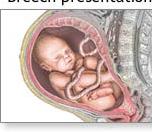
1)The baby’s position is breeched. A baby is meant to have his head down into the birth canal during normal birth but when his bottom comes first or he lies sideways, it becomes difficult to safely deliver him.
2) When the baby’s head is not channeling into the birth pelvis.
3) If the umbilical cord is coming before the baby through the cervix.
Why cesarean is not safe
Vaginal birth remains the best birth option because it is safer and less expensive.
1)Existence of pain after weeks or months after child birth
2) Increased risk of having infection.
3)It is difficult taking care of baby after birth.
4)It poses risk for subsequent pregnancy if not managed well.
How cesarean birth is performed in the theatre
Before the cesarean section, below your belly will be shaved to make space for the cut (incision). You will be given antacid to reduce acid level in your stomach and a fetal monitor will be used to check the heart of your baby.
You will be taken to the surgery room right there you will be given anesthesia to kill pain, it make the lower part of of your body numb. Trembling, and drop in the blood pressure and vomiting are common or associated with anesthesia injection which could be spinal or epidural anesthesia. A catheter is connected to your bladder to drain urine, then your belly is washed with antiseptic to make it germ free.
Your belly is covered with a surgical sheet with whole that centers on the spot where the incision will be made. The doctors will cut the portion in your belly that has been washed and sterilized. Two incisions will be made the first is on your skin and second on the uterus, you may not feel pain while the surgery is going on but may feel pressure and pulling. The doctor brings out the baby and sucks out mucus and fluids out of his mouth and nose, then cuts the cord. The placenta is removed and the incision on your belly and uterus is closed back.
After cesarean section, if you are strong enough, the doctor gives you your baby to cuddle and establish bond with him. You will be moved to special care unit where you will be monitored and given anesthesia when necessary to relieve pain.

Complications in Pregnancy

Pregnancy can be threatened even when it is not expected. Some complications in pregnancy are severe such that you will need urgent medical attention. The complications develop from many factors such as diabetes, hypertension and even STDs (Sexually Transmitted Disease) such as syphilis, Chlamydia and other conditions such as virus, bacteria and parasites. The possible pregnancy complications that can harm you and your developing fetus are:
Gestational diabetes.

This is quite a common complication that develops; between 2 and 7% of women develop this condition. If this condition is not treated it can increase your risk miscarriage and even death of the fetus and also thyroid problems. This generally develops during the second trimester (14-28 weeks) This can be treated with insulin to manage your blood sugar levels.

Amniotic fluid

This is a complication that develops from a very high polyhydramnios (having too much amniotic fluid in the womb) It occurs in about 1in 250 pregnancies or very low Oligohydramnios (having too little amniotic fluid in your womb). Too much amniotic fluid causes pressure on your uterus and may lead to pre-term delivery puts pressure on your diaphragm, which leads to breathing problems.
Too little amniotic fluid leads to poor fetal growth, post-term delivery, birth defects such as urinary tract abnormalities.

Placental complications

Complications of placenta are placental abruption (wherein the placental lining has separated from the uterus of the mother. It is the most common cause of late pregnancy bleeding. In humans, it refers to the abnormal separation after 20 weeks of gestation and prior to birth. It occurs in 1% of pregnancies) and placental previa ( your placenta is lying unusually low in your uterus, next to or covering your cervix).
Premature detachment of a normally situated placenta is placental abruption where the exact cause for this condition is unknown. The detachment may be partial or complete. Placental previa is the condition where the placenta is located in lower segment of the uterus, partially or completely covering the opening of the cervix. It leads to severe bleeding during second and third trimesters of pregnancy. The exact cause of placental previa is not known.

Preeclampsia (high blood pressure)

The development of high blood pressure. It generally occurs after about 20 weeks it is also known as toxaemia.

Ectopic pregnancy

This is a complication where the development of the fetus takes place outside of the uterus or even in the fallopian tubes. It is also known as a tubal pregnancy.

Rh Factor

The Rh factor in your blood type can cause harm to your baby. If the mother is Rh negative and her partner Rh positive, the combination results in a baby with Rh positive. In this condition, when the blood transfers from mother to the child, the red blood cells will break down leading to anaemia.

Miscarriage

Miscarriage is an unintentional or sudden loss of pregnancy. This type of pregnancy complication develops mostly due to age, gene factors, malnutrition, environmental hazards, hormonal problems, etc.